

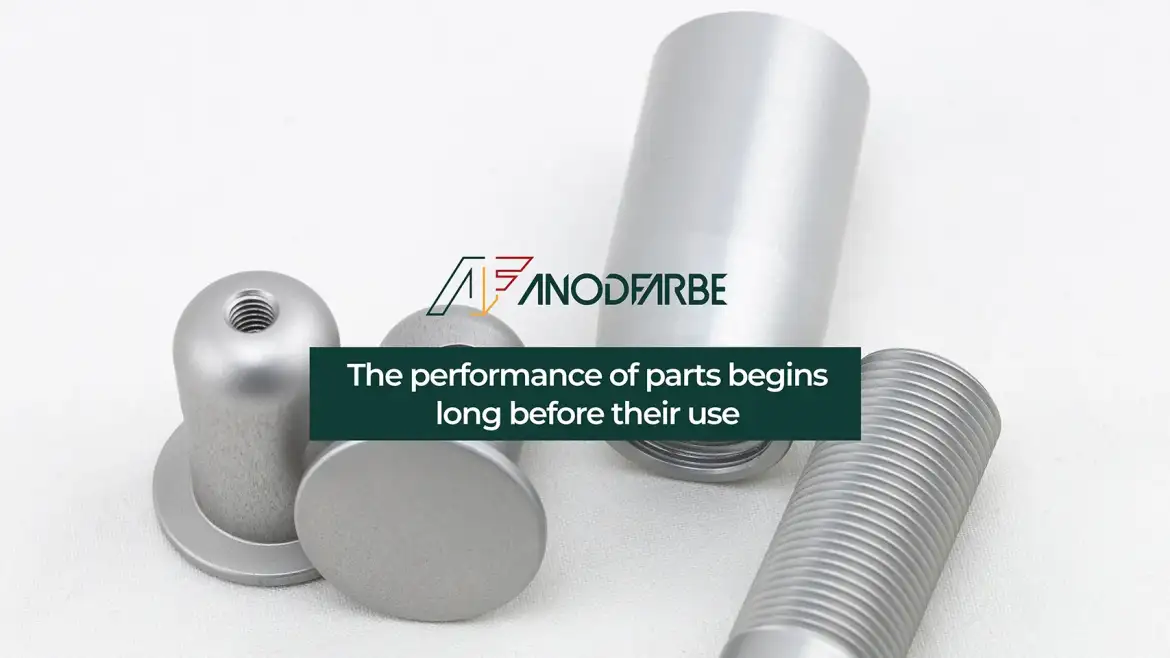
In most industrial contexts, the performance of a part is only evaluated when it is already in operation.
However, much of its resistance, stability, and durability is defined long before that — still in the surface treatment phase.
This is where small differences begin to have a significant impact over time.
The surface of a part is the first point of contact with the environment where it will be used. This means that it is constantly exposed to factors such as:
- mechanical wear
- temperature variations
- humidity and corrosion
- continuous use
Without adequate protection, these factors can accelerate material degradation and compromise the overall performance of the component.
Surface treatments should not be seen merely as a final step in the production process. In reality, they represent a technical solution with a direct impact on the performance of the part.
Processes such as:
- Chemical Nickel Plating
- Colorless Anodizing
- Colored Anodizing
- Type III Hard Anodizing
allow adapting the surface behavior to the specific requirements of each application.
When correctly applied, these processes contribute to:
- greater wear resistance
- enhanced corrosion protection
- improved dimensional stability
- greater durability in service
- reduction of premature failures
In other words, the value lies not only in the final appearance of the part, but in its ability to maintain performance over time.
Choosing the appropriate surface treatment is a strategic decision that can directly influence:
- maintenance costs
- replacement frequency
- operational efficiency
- system reliability
In industry, anticipating problems is always more efficient than reacting to failures.